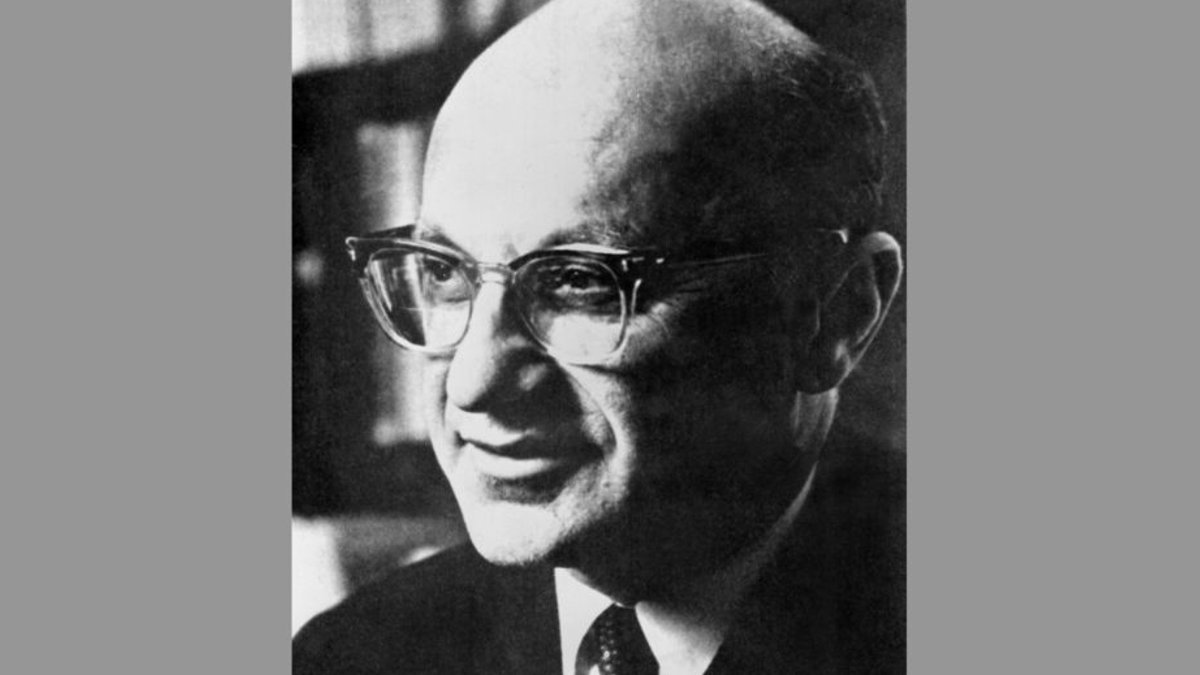
In a debate exploring the roots of America’s healthcare dysfunction, two experts with decades of policy experience discussed the role of neoliberalism in shaping the system’s challenges. The conversation, hosted by journalist Torie Bosch, featured John E. McDonough, author of America’s Wrong Turn: U.S. Healthcare in the Neoliberal Era, and Stuart Butler, a scholar at the Brookings Institution who worked with conservative think tanks on health reform.
The Neoliberal Roots
McDonough argues that the rise of neoliberalism in the 1980s, inspired by economist Milton Friedman, fundamentally reshaped American healthcare. He contends that interconnected issues—rising costs, medical debt, private equity dominance, and hospital consolidations—trace back to this movement’s emphasis on market-driven solutions and shareholder value. The shift began with Ronald Reagan’s administration, which rewrote antitrust guidelines in 1981 and 1982, prioritizing consumer prices over broader competition measures. This change dramatically reduced antitrust enforcement, enabling healthcare mergers that left 90% of U.S. counties with highly concentrated hospital markets, according to the Herfindahl-Hirschman Index.
McDonough highlights the erosion of public trust in healthcare, citing a Gallup poll showing confidence in the sector dropping from 79% in 1975 to 28% today. He attributes this to the corporatization of hospitals, where decision-making increasingly occurs far from local communities, driven by profit motives rather than patient needs. Private equity firms, he argues, exemplify this trend, often acquiring mid-sized healthcare providers not to improve care but to extract value through real estate sales and cost-cutting.
Disagreement on Milton Friedman’s Legacy
Butler, while acknowledging shared concerns about healthcare access and costs, disputes McDonough’s broad condemnation of neoliberalism. He emphasizes that Friedman’s core principles, economic freedom and opposition to monopolies, remained consistent, even as his methods evolved. Butler explains that Friedman initially supported antitrust enforcement but later criticized its politicization, advocating instead for removing barriers to market entry, such as restrictive licensing and Certificate of Need laws. These, Butler argues, better enable competition than traditional antitrust cases.
Butler also reinterprets Friedman’s 1970 New York Times op-ed on corporate purpose, which emphasized shareholder returns. He clarifies that Friedman and Friedrich Hayek viewed corporations as bound by societal values and legal obligations, not as entities free to exploit workers or patients. As Butler notes, “And then when you dig in to Friedman’s and others’ views, including Friedrich Hayek, who is the kind of intellectual grandfather in a way, or father of Friedman, the view was that corporations, and bu…”. He concedes that some private equity practices harm patients but suggests these firms can still drive innovation in sectors like nursing homes if properly regulated.
Massachusetts Roots and the Affordable Care Act
Butler described his early involvement in Massachusetts healthcare reform during the 2000s, working alongside Republican Governor Mitt Romney. He emphasized that both parties supported an individual mandate to ensure universal coverage. This bipartisan effort, he noted, later influenced the design of the Affordable Care Act. “And we argue to some extent about the methodology of that, but not in Massachusetts, not greatly.” His account highlighted how cross-ideological collaboration shaped key policy elements.
McDonough acknowledged Butler’s point about Massachusetts but framed it as evidence of pragmatic problem-solving rather than ideological alignment. He contrasted this with the broader national trajectory, where market-driven policies increasingly prioritized corporate interests over patient needs.
Private Equity and Regulatory Challenges
Both experts agreed that private equity firms often exploit healthcare systems for short-term gains. McDonough cited their practice of purchasing mid-sized providers, extracting value through real estate sales, and exiting within five to seven years. “They go after middle range organizations that have some money and some value where they can go in there and take their real estate and sell it to a real estate investment trust, get rich really fast,,” he said, leaving communities vulnerable.
“And I think the key as we look forward is how can we get people who are willing to take high risks with their capital, which is what to a large extent we’re talking about with private equity, to have”.
