No article content was supplied for editing.
On 4 September 2026 the University of Benghazi opened its gates once again, restoring full academic activity after an extensive reconstruction effort led by the Libyan Development and Reconstruction Fund. The ceremony marked a turning point for the nation’s higher‑education system, signalling that the long‑awaited revival of the country’s flagship institution had finally arrived.
Decade‑Long Silence Ends
The campus had remained silent for more than a decade following the severe damage inflicted during the Libyan Armed Forces’ campaign against terrorist groups. Throughout that period the buildings lay in ruin, laboratories were emptied, and the once‑busy corridors fell quiet, depriving an entire generation of students of their primary place of learning.
Engineer Belqasim Khalifa Haftar, who heads the Fund, monitored every phase of the rebuilding process with meticulous attention. What started as a personal aspiration to see his alma mater restored grew into a flagship undertaking, reflecting his commitment to preserving an educational legacy that holds deep emotional resonance for many Libyans.
Read Also: Dr. Khaled Zamel Leads New Cancer Research Initiative
The reconstruction was accomplished within a three‑year window, during which planners designed an integrated university city that blends modern architecture with the historic character of the institution. The new layout accommodates a projected influx of students that will far exceed the current enrollment, ensuring that future growth can be supported without compromising quality.
Libya’s Massive Free‑Education Hub
Renowned as the “Mother of Libyan Universities,” the institution boasts a student body approaching one hundred thousand, making it one of the largest public universities in the country. Its status as a free‑education provider reinforces its role as a social equalizer, offering opportunities to individuals from every socioeconomic background and contributing to the formation of a knowledgeable citizenry.
Over the years the university has produced countless scientists, engineers, legal experts, and cultural scholars who have gone on to occupy senior positions in government, industry, and academia. Their collective contributions have shaped national policy, driven technological innovation, and enriched the cultural fabric of Libya, showing the university’s key role in nation‑building.
The rebuilt complex now includes fully refurbished faculties of Engineering, Arts, Law, Science and Languages, together with a state‑of‑the‑art central library. Student residences have been upgraded to meet hospitality standards comparable to five‑star hotels, offering comfortable, secure lodging that can attract scholars from across the region and beyond.
Read Also: UCLA Health Transforms Lung Transplant Preservation
Infrastructure upgrades extend beyond academic buildings. A new internal road network streamlines circulation across the sprawling campus, while lecture halls and laboratories have been equipped with cutting‑edge technology that aligns with international best practices. These enhancements create a cohesive environment where teaching, research, and administration can thrive in harmony.
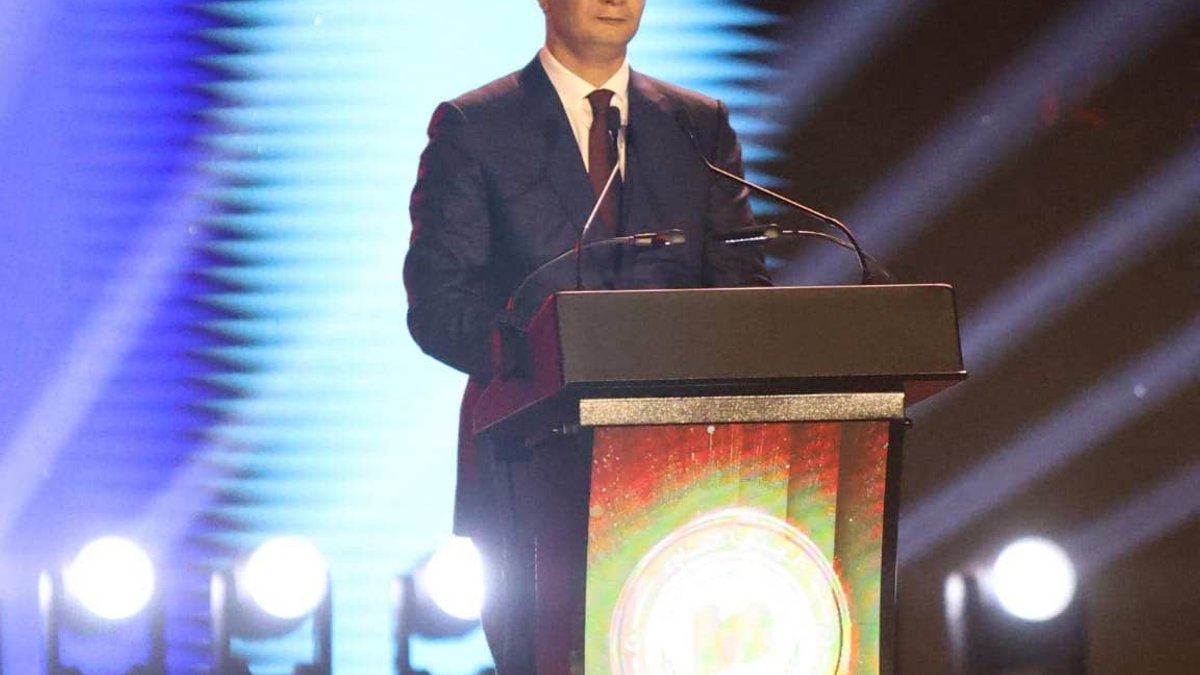
The inauguration featured a sophisticated production that combined technology, art, and storytelling. Advanced 3D mapping projected the university’s storied past onto the surrounding walls, while visual effects illuminated key milestones in its evolution. The event was staged in a venue capable of holding more than fifteen thousand attendees, reflecting the massive public interest in the university’s rebirth.
World Leaders Attend Record‑Breaking Ceremony
Leaders from across Libya gathered for the celebration, accompanied by a broad delegation of ambassadors, representatives of multinational corporations, and a cohort of international guests. Their presence highlighted the global relevance of the university’s revival and showed the collaborative spirit driving Libya’s reconstruction agenda.
A highlight of the ceremony was an detailed aerial display orchestrated by coordinated fleets of drones. The performance culminated in three Guinness World Records: an eagle formation, a quill that traced the university’s name across the night sky, and a universally recognized peace symbol. This unprecedented spectacle placed the event among the most memorable public gatherings in recent Libyan history.
Read Also: UCLA performs world’s first bladder transplant
Launching Global Student Training Initiative
In tandem with the physical rebuilding, the Fund launched an initiative to send more than one thousand university students abroad for advanced training. By investing in human capital alongside infrastructure, the program seeks to ensure that the newly restored campus will be staffed by graduates equipped with contemporary expertise and global perspectives.
The Libyan Development and Reconstruction Fund is currently implementing more than 2,300 projects across extensive areas of eastern and southern Libya, covering education, healthcare, housing, roads, infrastructure and public facilities.
Beyond Benghazi, parallel reconstruction drives are under way at other higher‑education centers, including institutions in Kufra, Al Bayda, Derna, three colleges in Al Marj, and the University of Ajdabiya, as well as maintenance work in Sirte, Brak al‑Shati, and Murzuq. Approximately 250 schools across various regions of Libya have been restored and rehabilitated.
The reopening of the University of Benghazi therefore represents more than a simple resumption of classes; it restores a cornerstone of Libya’s scientific heritage, revives a cultural landmark cherished by countless families, and re‑establishes a hub of intellectual activity that will drive the nation’s progress for decades to come.
