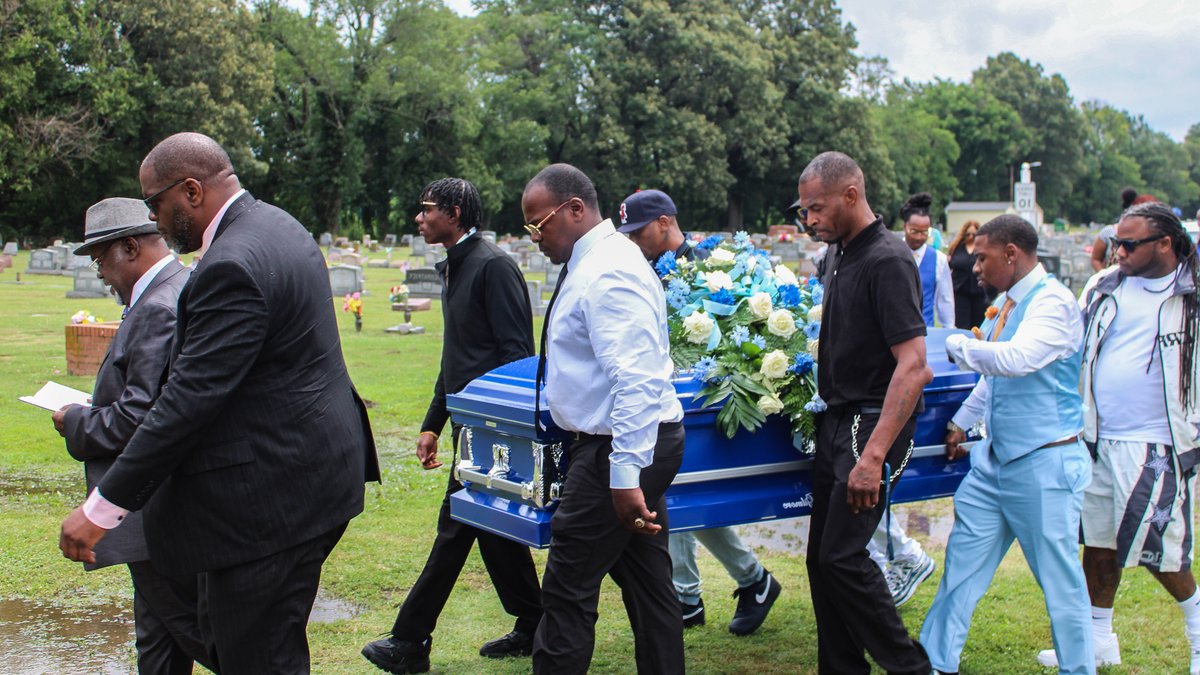
Hundreds of mourners gathered at Cornerstone Baptist Church in Sikeston, Missouri, to honor Lloyd Gilmore, a 44-year-old man who died in police custody on June 10. Gilmore’s daughter, Lania Gilmore, told the church full of mourners to “stay woke” and “be there for your family and love on one another.”
The police report obtained through a public records request states that Gilmore was shocked with a Taser and put into hobble restraints during a physical altercation involving seven Sikeston police officers. Two autopsies were performed, but the cause of death has not been released, and the result of a toxicology report remains pending.
Gilmore had approached an officer in the parking lot of the police station, speaking words the officer said he could not understand. Lania Gilmore said her dad, who had mental health issues, had asked her to call the police department, and he ran there seeking help.
Some Black Sikeston residents are concerned about racial bias within the city’s police department. Mark Wiggins, president of Sikeston’s NAACP branch, said, “We need the police. We just need them to do their jobs correctly and leave Black people alone.”
Roger Mitchell Jr., a forensic pathologist and former president of the National Medical Association, said the public paid little attention to a report released last year about deaths in custody. The report urged Congress to require states to collect and report data on all in-custody deaths, a problem that disproportionately affects Black men.
Sikeston has a history of racial violence. Mark Wiggins grew up in the city.
Lania Gilmore pleaded with the city to release more information about her father’s case during a City Council meeting. Other residents wanted to know why the officers involved were not placed on administrative leave immediately after Gilmore died.
Nationwide, many communities have created specialized non-law enforcement teams to assist people in crisis.
Louis Houston, a longtime Sikeston resident, decided to move 30 minutes outside the city after Gilmore died. He said the way the police department treats Black residents was affecting his mental health, and he’s already thinking about the conversations he will have with his young children about how to respond if they ever interact with a police officer.
As the investigation into Gilmore’s death continues, the community remains concerned about the police department’s actions and the lack of transparency. The police brutality is complex, and it requires an approach that addresses the systemic problems that lead to these incidents.
It’s essential to focus on the facts of the case and the community’s concerns, rather than speculating about the outcome. The city’s police department and the community must work together to build trust and ensure that incidents like Gilmore’s death are thoroughly investigated and addressed.
The incident has also raised concerns about the need for crisis intervention training for police officers and the importance of community-led initiatives to address racial equity and social justice, such as federal campaigns for accountability.
