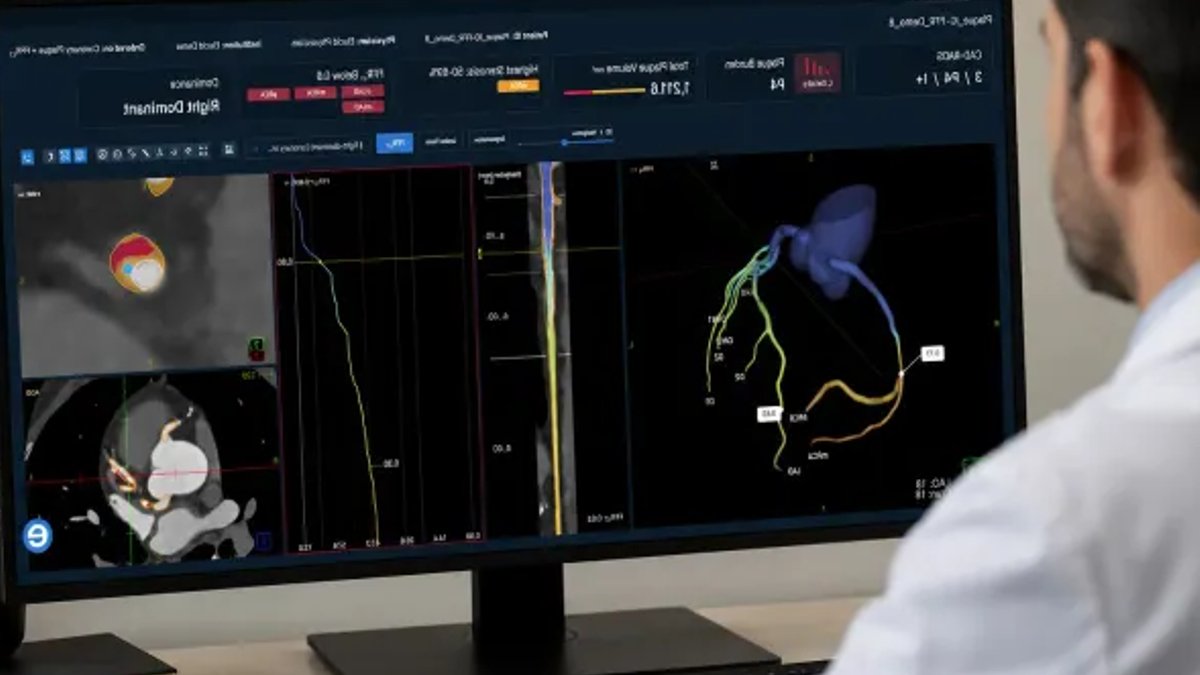
Elucid raises $55 million to commercialize its cardiovascular imaging platform, aiming to broaden ties with medical‑technology firms. The solution, called Plaque‑IQ, transforms CT scans into detailed three‑dimensional plaque maps.
Funding round and investors
The Series D financing disclosed last week brought in a large medtech corporation as the fourth publicly traded strategic backer.
The unnamed partner joins existing supporters such as IAG Capital Partners and Patient Square Capital’s Elevage Medical Technologies, along with other early investors.
With this injection, total capital raised climbs to roughly $185 million. Elucid says the money will fund the rollout of its clinical decision suite and deepen collaborations across the industry.
Payers including Aetna, Humana, Cigna and UnitedHealthcare already cover plaque analysis, while the Centers for Medicare and Medicaid Services reimburse the approach. The agency classifies the analysis under a specific billing code, allowing hospitals to claim reimbursement without additional documentation.
Read Also: Vara Gets CE Mark for AI Breast Cancer Screening
Regulatory progress and product lineup
The company secured FDA clearance for its Plaque‑IQ software in 2024. The clearance followed a multi‑year clinical study that demonstrated high correlation with invasive measurements. That tool converts coronary CT angiography scans into three‑dimensional models that quantify plaque morphology.
According to its data, by January 2026 more than 70 % of insured Americans had plans covering coronary plaque analysis.
Building on that, a 510(k) submission for a CT fractional flow reserve product—known as FFR‑CT—is under FDA review. The BioIntegrated version blends anatomy, plaque biology and physiology to locate blockages and gauge ischemia without invasive procedures. If approved, the tool would join Plaque‑IQ in a unified workflow that reduces the need for catheter‑based testing.
Competitors such as Heartflow target similar markets, but the firm plans to combine both offerings into a single decision platform that helps physicians stratify risk and tailor therapy for atherosclerotic disease. Heartflow’s own platform focuses on flow trends, while Elucid’s approach adds plaque composition for a richer picture.
Comparing this move to earlier AI‑driven imaging efforts, the strategy reflects a gradual shift seen in oncology, where non‑invasive diagnostics have expanded from niche uses to broader clinical pathways. The pattern suggests that once reimbursement aligns, adoption can accelerate quickly, though real‑world outcomes will still need verification.
Read Also: Boston Scientific Restores Shipping After Cyberattack
Adoption could rise rapidly.
CEO Kelly Huang said the approach is “analogous to oncology’s shift from population‑based, one‑size treatment, applying AI to integrate anatomy, biology and physiology to bring personalized treatment to coronary artery disease management.” He added that the unified platform aims to give clinicians a single view of disease severity.
Industry observers note that the presence of a major medtech player in the financing round signals confidence, yet the ultimate market share will depend on how smoothly the products integrate into existing workflows. Analysts estimate the U.S. coronary imaging market could exceed several billion dollars within the next five years, driven by aging demographics and rising heart disease prevalence.
Elucid aims to complete the FDA review by mid‑2027 and launch the integrated platform to major health systems shortly thereafter.
